In Anlehnung an den Genelec W371A https://www.genelec.com/w371a habe ich vor mit den exquisiten Visaton Chassis TIW250XS und TIW300 eine etwas verkleinerte Version aufzubauen.
Laut Genelec soll das als erweiterter Subwoofer bis 500Hz in 3 Betriebsmodi funktionieren:
Ich stimme ansonsten dafür, deinen Nick in "Cato" zu ändern; derjenige, der im Senat immer mit "...im übrigen bin ich der Meinung, dass MEG gehört werden muss!" geschlossen hat . (copyright by mechanic)
Hab' mal ein wenig gerechnet:
Der TIW250XS nach hinten in Anlehnung an den Sub 25.50. Allerdings würde ich den BR-Kanal etwas großzügiger und gerundet auslegen ähnlich wie auf dem Genelec Bild:
Quelle: https://image.midifan.com/data/attac...1567780298.jpg
50 L BR für den TIW250XS und 40 L CB für den TIW300 laufen auf Außenabmessungen von ca. 37 cm x 37 cm x 98 cm hinaus ....ideal als Ständer für jede kleinere Visaton Box!
Ich stimme ansonsten dafür, deinen Nick in "Cato" zu ändern; derjenige, der im Senat immer mit "...im übrigen bin ich der Meinung, dass MEG gehört werden muss!" geschlossen hat . (copyright by mechanic)
genau darum baue ich das Teil auch auf. Ich stehe nicht auf raumakustische Maßnahmen (meine Frau erst recht nicht ) also muss der LS es "maximal richten"
Ich stimme ansonsten dafür, deinen Nick in "Cato" zu ändern; derjenige, der im Senat immer mit "...im übrigen bin ich der Meinung, dass MEG gehört werden muss!" geschlossen hat . (copyright by mechanic)
50 L BR für den TIW250XS und 40 L CB für den TIW300 laufen auf Außenabmessungen von ca. 37 cm x 37 cm x 98 cm hinaus ....ideal als Ständer für jede kleinere Visaton Box!
Kleiner als das Original. Finde ich interessant, bin gespannt wie es wird.
98 cm als Ständer ist vielleicht ein bischen hoch wegen HT eines Tops. Zumindest wenn ich an die Hochtöner Höhen Festlegung der Atlantis WG (auch im Beisein des Admins im Visaton Hörraum auf dem Sofa sitzend denke). Mal sehen.
Viele Grüße aus dem Bergischen Land
Jörg
Ab jetzt auch wieder Yamaha, ohne Kickstarter und breitem Lenker
@Jörg: Danke! Aber man kann ja auch einen 2-Weger auf den Kopf stellen. Der Sub wäre ja recht flexibel was die Trennfrequenz zum TIW300 angeht.
@Jürgen: Ich denke das Konzept von Genelec ist recht durchdacht. Wie die Filter zu setzen sein werden gilt es herauszufinden.
Ich stimme ansonsten dafür, deinen Nick in "Cato" zu ändern; derjenige, der im Senat immer mit "...im übrigen bin ich der Meinung, dass MEG gehört werden muss!" geschlossen hat . (copyright by mechanic)
Das sieht nix aus und die Ortung wird auch nicht verändert......
Nix verstehn, was Du sagn!
Ich stimme ansonsten dafür, deinen Nick in "Cato" zu ändern; derjenige, der im Senat immer mit "...im übrigen bin ich der Meinung, dass MEG gehört werden muss!" geschlossen hat . (copyright by mechanic)
Sehe ich nicht so, weil ich die RL901K hier zu Hause/in der Hochschule habe. Die macht das passiv mit dem kardioidem Abstrahlverhalten und in Anbetracht von Begrenzungsflächen bestimmt nicht lehrbuchmäßig.....für mich der beste Bass, den ich gehört habe.
Speaker Boundary Interference Response (SBIR) is one of the most important—and misunderstood—factors in room acoustics. For anyone setting up a home theater, listening room, or recording studio, knowing how speaker placement affects frequency response is critical to getting a clean, detailed sound. In this article, we’ll break down what SBIR is, why it matters, and how to position your speakers to reduce its negative effects.
What Is SBIR?
SBIR (Speaker Boundary Interference Response) describes a type of phase cancellation that occurs when direct sound from a speaker is quickly followed by a reflected sound—usually from a nearby surface like a wall, floor, or ceiling in close proximity (within a few feet) of the speaker. When these two signals (the direct and the reflected) arrive at your ear out of phase, they interfere destructively, leading to dips (and possibly also peaks) in bass response and frequency range irregularities, especially in the low frequencies.
The root cause of SBIR lies in the behavior of omnidirectional sound waves, specifically in the bass region. This is a function of how bass behaves in a room, rather than a specific type of speaker design like a dipole or open baffle device. These lower sounds with a long wavelength below the Schroeder Frequency for the room radiate outward from the speaker and reflect off nearby surfaces before converging at both the speaker and the listener’s position. When these sound waves arrive at slightly different times due to different distances the sound travels, they interact—constructively in some places (causing a boost) and destructively in others (causing a dip). The most notable effect is the null, where the direct and reflected wave cancel each other out. But there’s also a modest boost just above the null frequency, due to phase alignment between the reflections and the direct signal.
This phenomenon can’t be fixed by EQ or amplifiers, because it results from comb filtering—the interference pattern created by two similar signals arriving out of phase.
How is SBIR Calculated?
The frequency at which the dip occurs is determined by the path length difference — the difference between how far the reflected sound travels and how far the direct sound travels to reach the listener. We can approximate this with simply taking double the distance between the speaker and the wall behind it, but it's a bit more accurate to measure the actual sound pathways for direct & reflected sound.
Either way, cancellation happens when that difference equals a half wavelength. The formula is:
Dip Frequency (Hz) = Speed of Sound / (2 × Path Length Difference)
With the speed of sound at ~1130 ft/s, if the direct path from speaker to listener is 8 feet and the reflected path off the front wall is 12 feet, the path length difference is 4 feet, and the cancellation dip occurs at:
1130 / (2 × 4) = 141.25 Hz
This lands squarely in the bass region, which is why SBIR so often shows up as a thin or a hollow low end.
The depth of the dip depends on the relative level of the reflected wave to the direct wave. A strong early reflection (within a few milliseconds) can cause up to a 12 dB drop in amplitude at that frequency, creating a noticeable hollow or muddy sound. But the further a sound has to travel, the weaker it gets.
Here's a quick reference table based on path length difference:
Path Length Difference (ft)
SBIR Dip Frequency (Hz)
Estimated Dip Depth (dB)
1
565
-12 dB
2
282.5
-11 dB
3
188
-10 dB
4
141.25
-9 dB
5
113
-8 dB
6
94.2
-7 dB
7
80.7
-6 dB
8
70.6
-5 dB
9
62.8
-4 dB
10
56.5
-3 dB
11
51.4
-2 dB
12
47.1
-1 dB
To find your path length difference, measure the direct path (speaker to listening position) and the reflected path (speaker → wall → listening position), then subtract the former from the latter. For a front wall reflection with the listener on-axis, the path length difference will typically be close to twice the speaker-to-wall distance, but for side walls, floor, and ceiling reflections the geometry will differ and the full calculation is worth doing.
Why Does SBIR Matter?
While room modes create large-scale frequency response problems tied to room size, SBIR affects the sound based on speaker placement. It can completely kill accuracy in the low end, obscuring critical musical information or exaggerating some notes while nulling others.
Practical Placement Strategies
Avoid placing speakers between 1 and 3 feet from a wall. This range tends to cause nulls in the critical 100–300Hz band.
Either flush-mount the speaker against the front wall or move it out beyond 3.5 feet, if the room size allows.
Add bass traps at the front wall, back wall, and side walls to help manage low frequencies and soften reflections that contribute to SBIR.
Adjust the listening position to avoid placing your head in the center of the room, where standing waves often create dips.
Treat first reflection points with the thickest acoustic panels or broadband absorbers (rather than diffusion) to minimize other sonic effects.
While SBIR is primarily about cancellation in the bass frequencies, the placement strategies often help with higher frequencies and imaging too, especially when paired with proper room treatments.
Treatment Is Still Key
Speaker and listening position adjustments help, but acoustic treatment is still the foundation of any great-sounding home theater, studio, or listening room. A well-treated room using broadband absorbers, diffusion, and bass traps can reduce the severity of SBIR and smooth out frequency response across the board.
Effective treatment means addressing:
The front wall (behind speakers)
Side walls and ceiling (early reflections)
The rear wall (to tame reflections and low end buildup)
GIK Products are designed specifically for these applications, with acoustic panels and bass traps that deliver real noise reduction and sound quality improvements.
Tools to Help
If you’re unsure where to start, try using tools like Room EQ Wizard (REW) to measure your room’s actual response, or consult a tutorial or SBIR calculator online to model the interaction of your speakers with nearby boundaries. That data can help determine whether you’re suffering from SBIR effects or broader room acoustics issues like room modes. It will also give you data on how other aspects of the system, like high frequencies, are performing.
Our team at GIK Acoustics offers a Free Acoustic Advice service to help you design the ideal setup based on your specific room. Whether it’s a small room, home theater, or recording studio, we’ll guide you through the best speaker placement, treatment strategy, and product recommendations.
When in Doubt, Ask for Help!
Understanding Speaker Boundary Interference Response (SBIR) is a vital step in optimizing your sound system. While placement alone can’t fix everything, smart speaker positioning—paired with strategic acoustic panels, bass traps, and room treatments—goes a long way in achieving balanced, powerful sound.
By avoiding critical distances and minimizing destructive interference, you can ensure your direct sound reaches the listener cleanly, and the reflected sound is properly managed. Don’t let your setup suffer from a preventable frequency response dip—start with solid placement, treat the room, and enjoy the full potential of your amplifiers, subwoofers, and speakers.
Need help with your project? Let us know. We’re here to help you unlock the sound your room was meant to have.
EDIT: Ich habe auch mit einem von Axel ausgelegtem Ripol sehr gute Erfahrungen gemacht, was Basswiedergabe angeht. Allerdings sind Ripole auch nicht aufstellungsunkritisch, obwohl es bei mir als Mono-Subv auch bis auf 30cm Wandabstand überzeugen konnte. Das Genelec Konzept bietet gegenüber beiden mehr Variationen. Aber klar: Hinstellen und spiel ist nicht.... da hat der leibe Gott den Messaufwand vorangestellt.
Ich stimme ansonsten dafür, deinen Nick in "Cato" zu ändern; derjenige, der im Senat immer mit "...im übrigen bin ich der Meinung, dass MEG gehört werden muss!" geschlossen hat . (copyright by mechanic)
Beim Besuch unseres Forums werden Cookies gesetzt. Dies sind kleine Textdateien, die lokal auf Ihrem Rechner in den Browserverlauf gespeichert werden. Die auf unserer Forums-Website eingesetzten Cookies sind technisch erforderlich und gewährleisten den Betrieb und die Komfort-Funktionalitäten des Forums.
Während Ihres Forum-Besuchs werden keine Cookies zu Marketingzwecken oder für Statistiken und Analysen gesetzt. Auch werden keine Daten an Dritte übermittelt.
Detaillierte Informationen zu unserer Verarbeitung von personenbezogenen Informationen erhalten Sie in unserer Datenschutzerklärung.
Wenn Sie auf „Einverstanden“ klicken, stimmen Sie unserer Datenschutzerklärung und dem Einsatz von technisch erforderlichen Cookies zu.


 . (copyright by mechanic)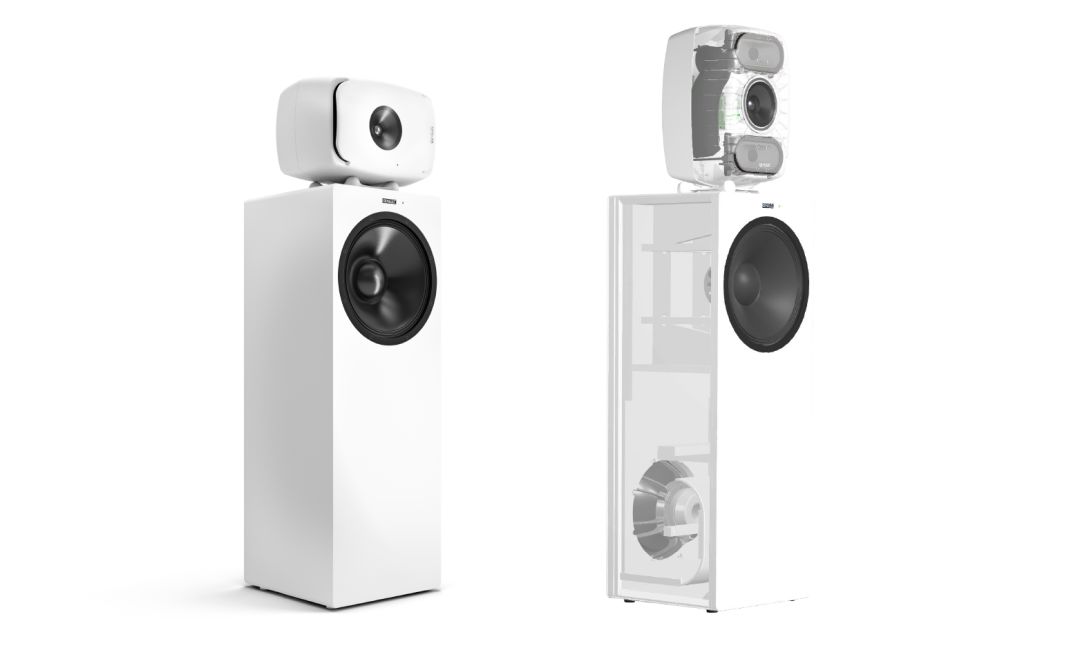


 ) also muss der LS es "maximal richten"


Kommentar